
Skills & Enterprise
Our training model consists of practical training, mentorship and direct employer connections that turn ability into work.
Training is built around what local markets in South Sudan actually need, not a fixed curriculum applied the same way everywhere. That means vocational training for trades already in demand, alongside business-development training for anyone starting or growing a small enterprise – costing a product, managing basic accounts, finding and keeping customers.
Training alone rarely opens a door on its own, so we pair it with mentorship from people already working in the field, and direct connections to employers and buyers looking for exactly these skills, For someone in Juba finishing tailoring or carpentry course, that’s the difference between a certificate and a first client.
On its own, a new skill can stall without money to buy materials or reach a market which is why Skills & Enterprise works alongside Financial Inclusion and Partnership & Systems, not as a standalone offering.
Financial Inclusion
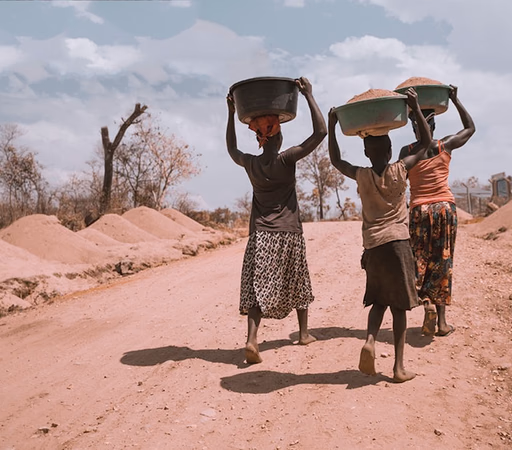
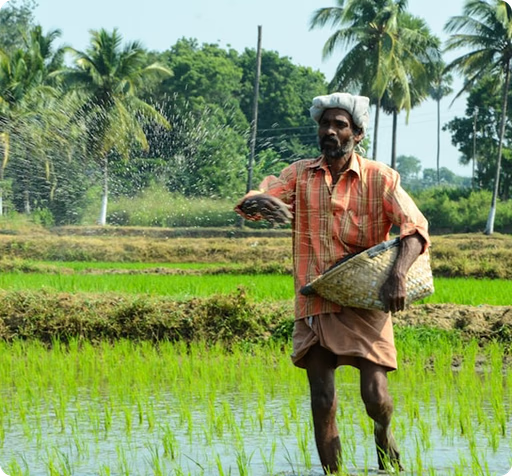
Village Savings and Loan Associations, sometimes called community savings groups, give people across South Sudan a safe, community-run way to save, borrow, and build capital together, often for the first time, without needing a bank branch or credit history to start. Groups are formed and managed by their own members, who set their own rules for saving, borrowing, and paying back, so the accountability sits inside the community rather than with an outside institution.
Financial literacy training runs alongside these groups, covering the basics that turn irregular income into something that can be planned around: budgeting, saving toward a specific goal, and understanding how borrowing and repayment actually work. For someone whose income shifts week to week — a trader, a small farmer — this is the difference between spending what comes in and building toward something.
On its own, a savings group gives people a safety net. Paired with Skills & Enterprise, it gives them the capital to act on a new skill. Paired with Resilient Livelihoods, it gives them something to fall back on when a season goes badly.
Resilient Livelihoods
Climate-smart agriculture and food security that protect what people build. Climate shocks and food security can undo years of progress in a single season. A flood or a failed harvest can erase what took years of saving and training to build.
Climate-smart agriculture gives farmers in South Sudan drought-resistant seed varieties, better water management, and diversified planting, so a bad season doesn’t mean a lost one. Food security support closes the seasonal gaps between harvests, and cash and voucher assistance steps in when a shock hits – giving people the flexibility to buy what they actually need, rather than a fixed package of goods.
None of this exists to replace what people are already building through Skills & Enterprise or Financial Inclusion. It exists to protect it. A farmer with a thriving small business and a savings group behind them can still lose everything to one bad flood without this layer in place. Resilient Livelihoods is what turns a shock into a setback instead of a reset.
Partnership & Systems
Community ownership and institutional partnerships that make opportunity last.
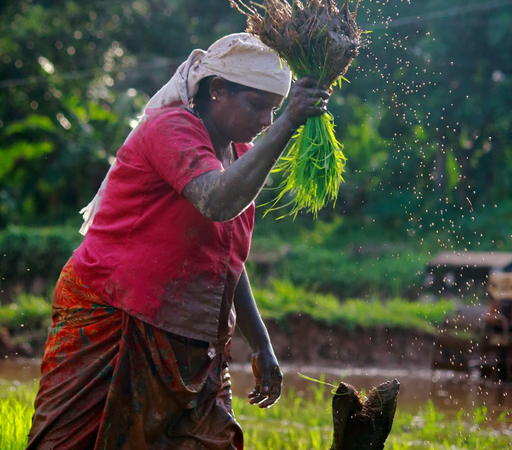
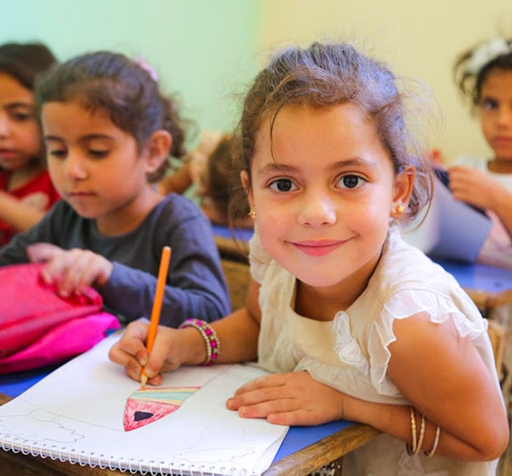
None of this works in isolation. Every programme starts with community ownership. Local leaders and participants are involved from the design stage, not brought in once a plan is already finished elsewhere. That’s what keeps the Skills to Income Pathway responsive to what people in South Sudan actually need, rather than a template applied from outside.
Community ownership gets people to the table; institutional partnerships get them to scale. We work alongside United Nations agencies, non-governmental organizations, government, and the private sector. Each playing a different role, from funding and policy influence to opening the financial and market connections that a community-rooted organization alone can’t reach.
It’s this pairing community-led design with institutional reach that lets Skills & Enterprise, Financial Inclusion, and Resilient Livelihoods operate at a scale that matters, rather than staying small and disconnected from each other.